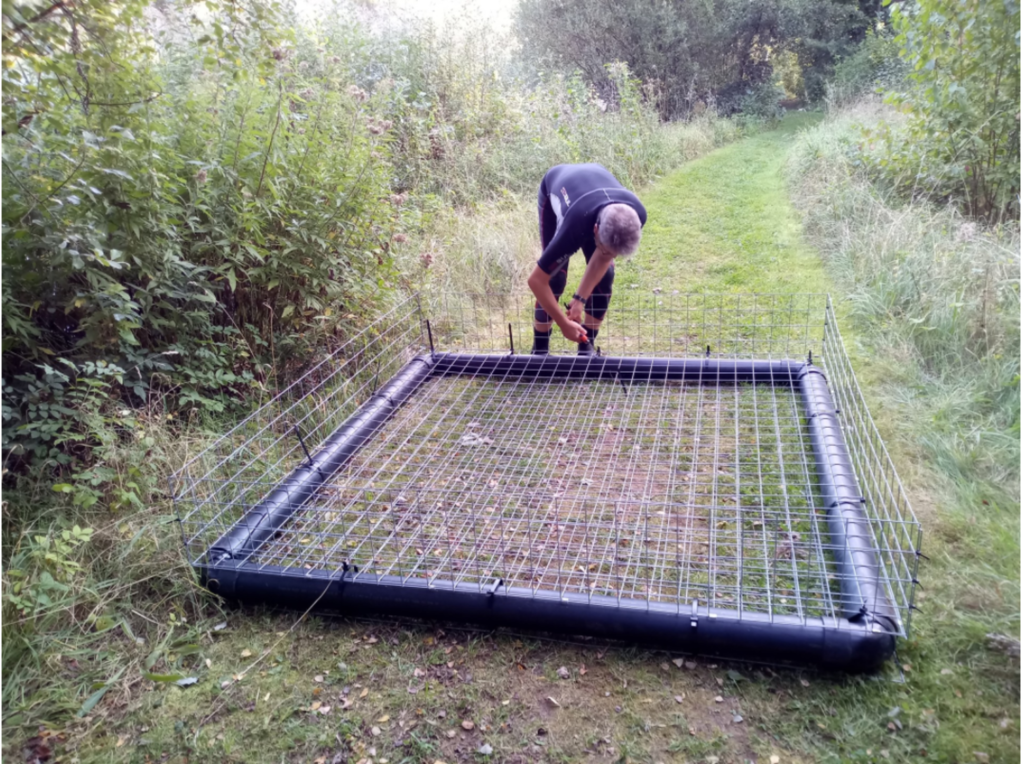
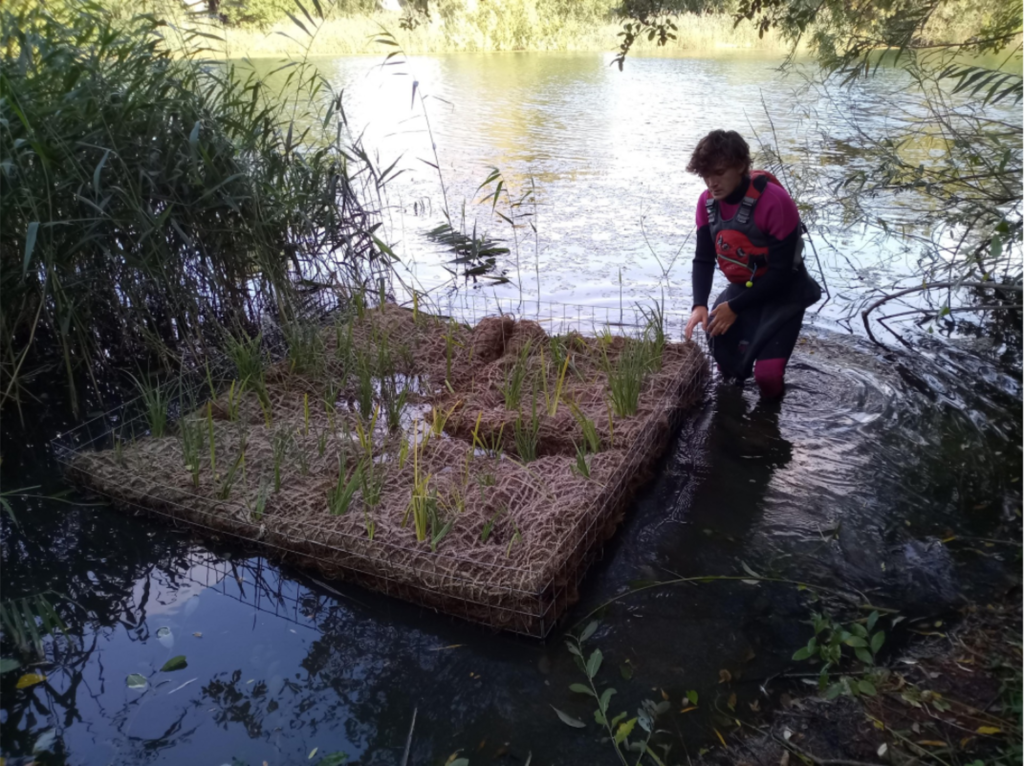
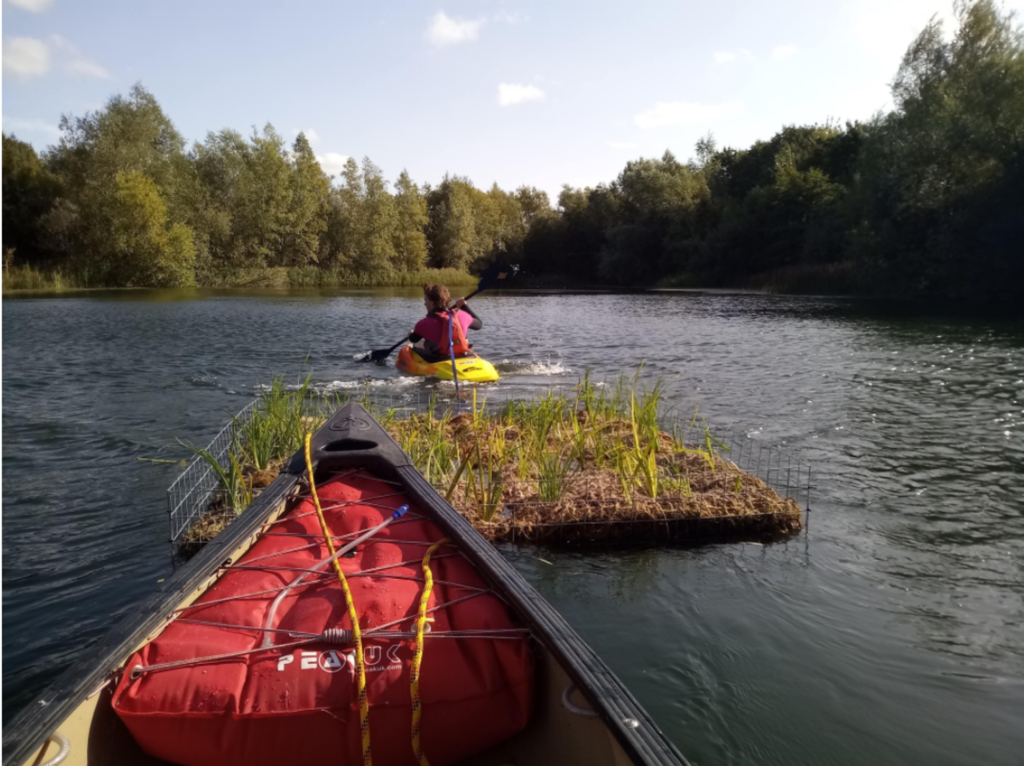
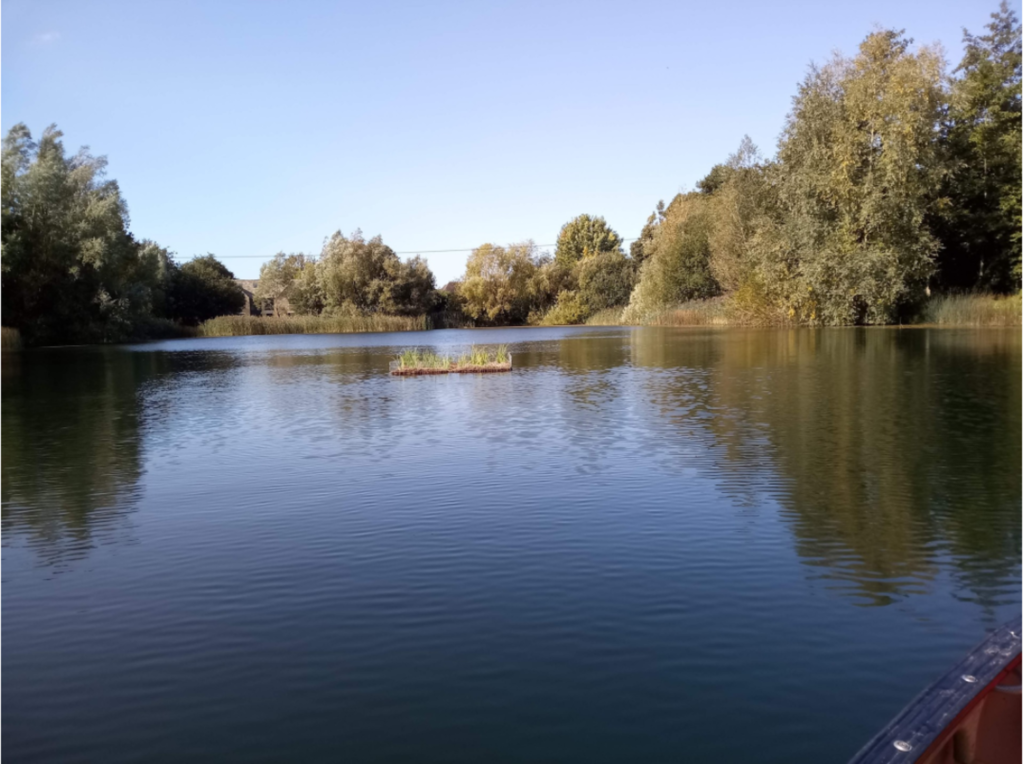
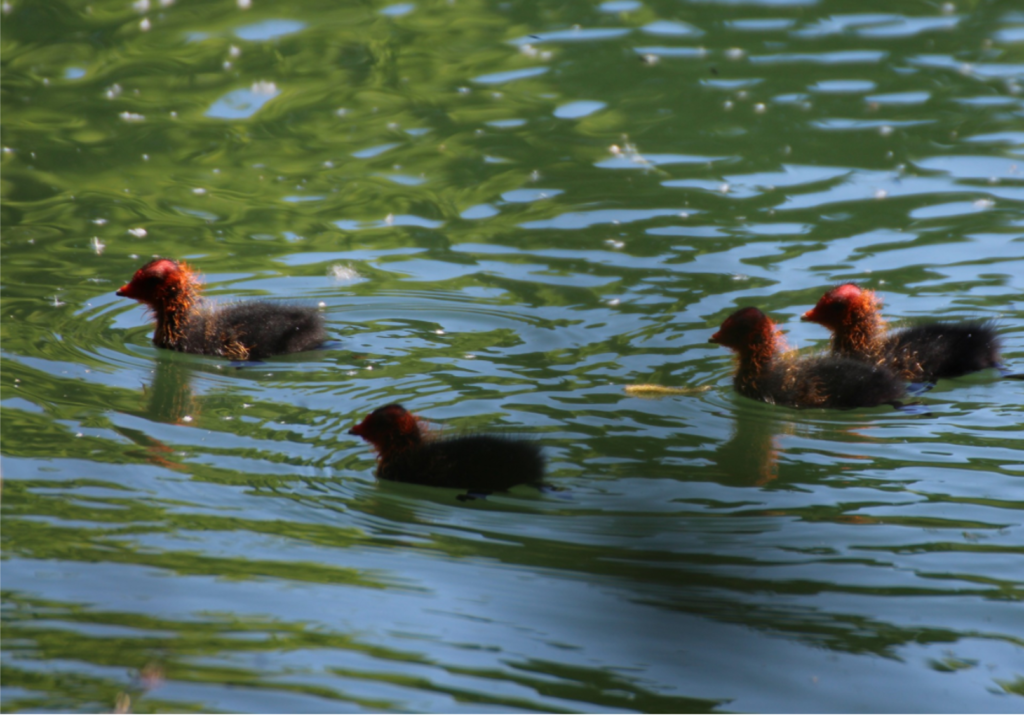
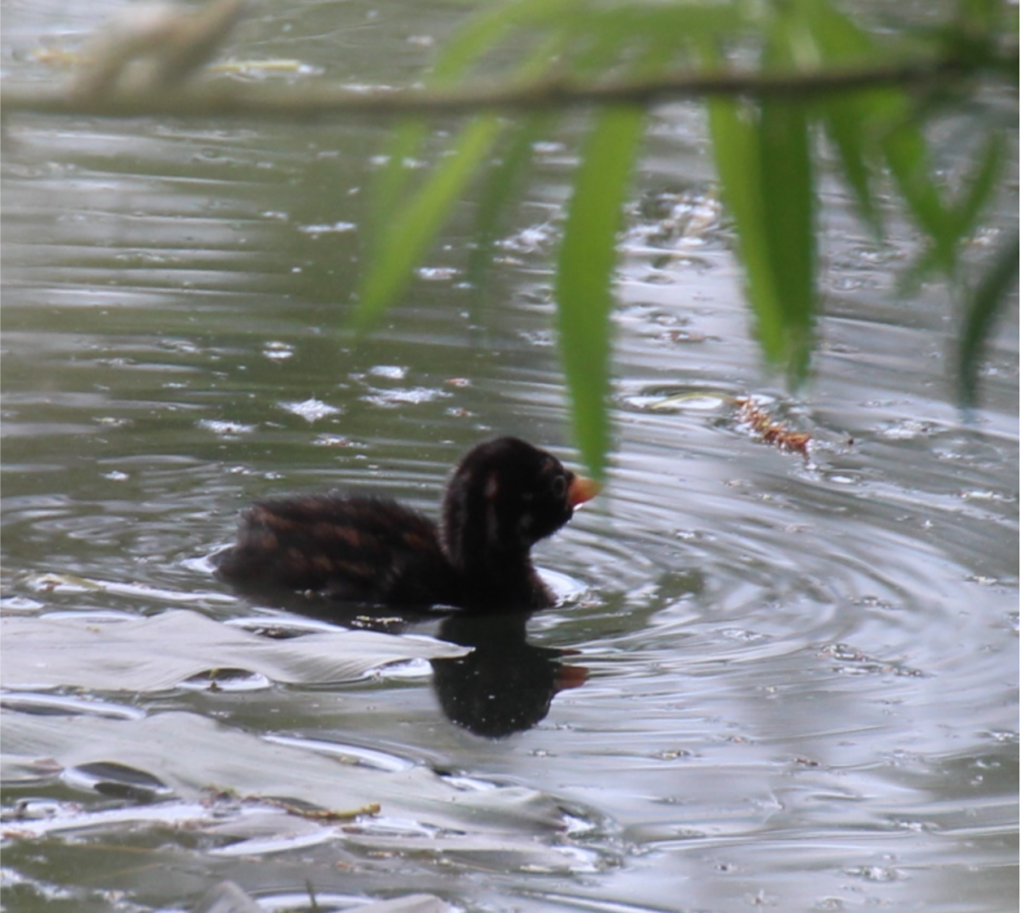
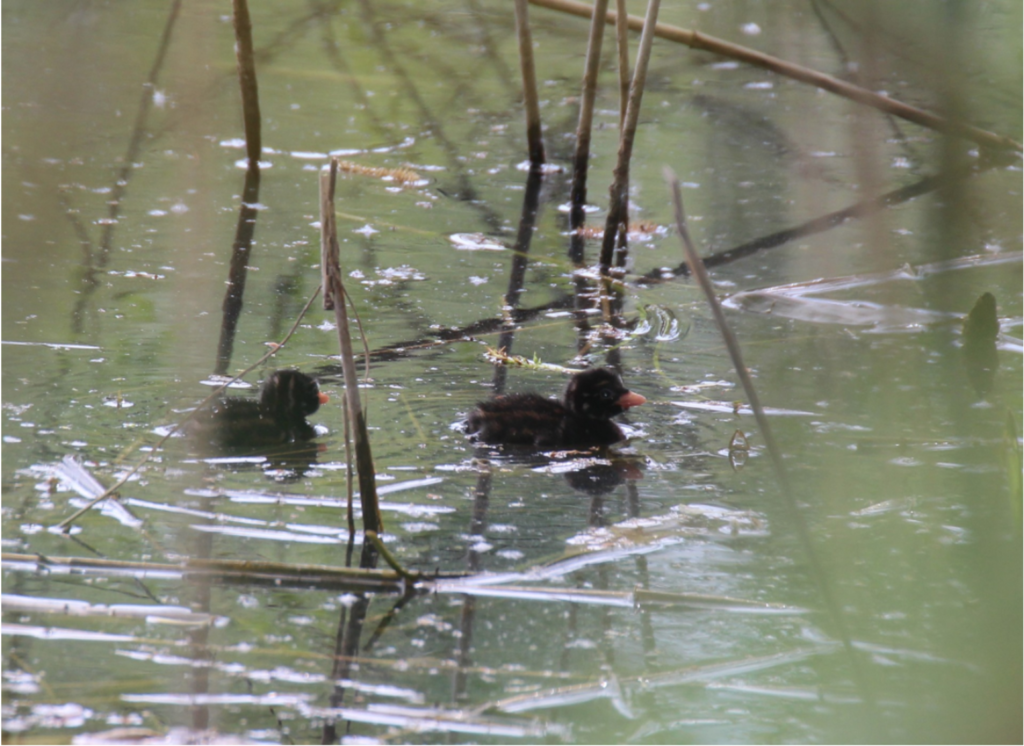
One of the projects that was funded by our Calor Rural Communities Grant was the installation of a floating island for birds to nest on. The island was assembled, floated out and anchored by Nick & Chris Cartwright using their kayaks. Let’s hope the birds take up residence next spring!
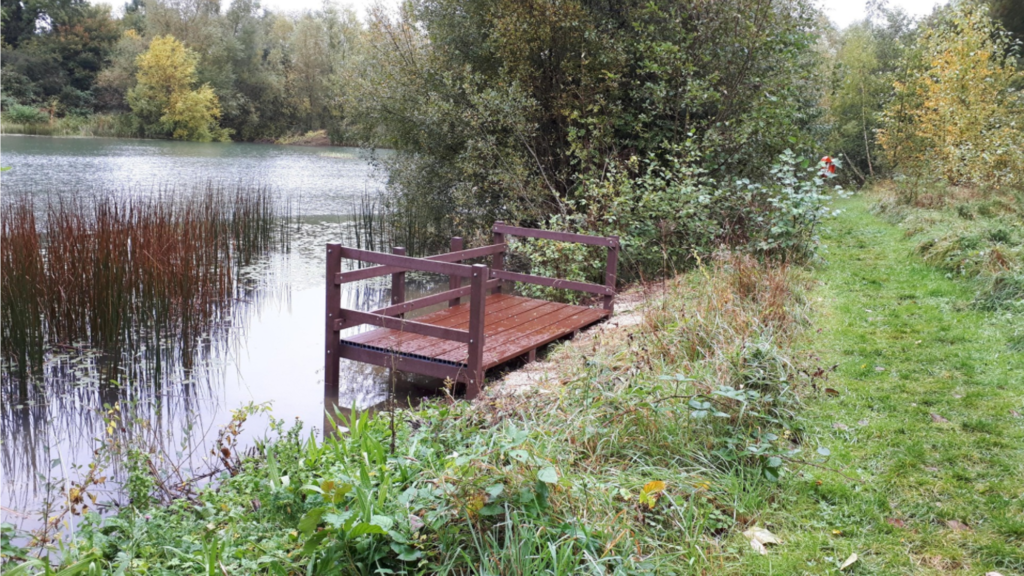
Two weeks ago our new pond dipping platform arrived and is now in place at the lake. It just needs a few plants to grow up around it. We are hoping to organise pond dipping activities for villagers in the spring.
The horsetail(Equisetum) is an ancient genus of plants whose relatives occur as fossils in Carboniferous sedimentary rocks up to 350 million years old. They formed a considerable proportion of the ‘trees’ in the world’s first forests where the giant horsetails grew to between 10 and 30 metres. Today horsetails are generally less than one metre tall.
Horsetails are non-flowering plants, related to ferns. They reproduce in two ways: from spores produced on a fertile cone-like shoot (the strobilus) or from underground branching stems (rhizomes) from which the stems emerge in early spring.
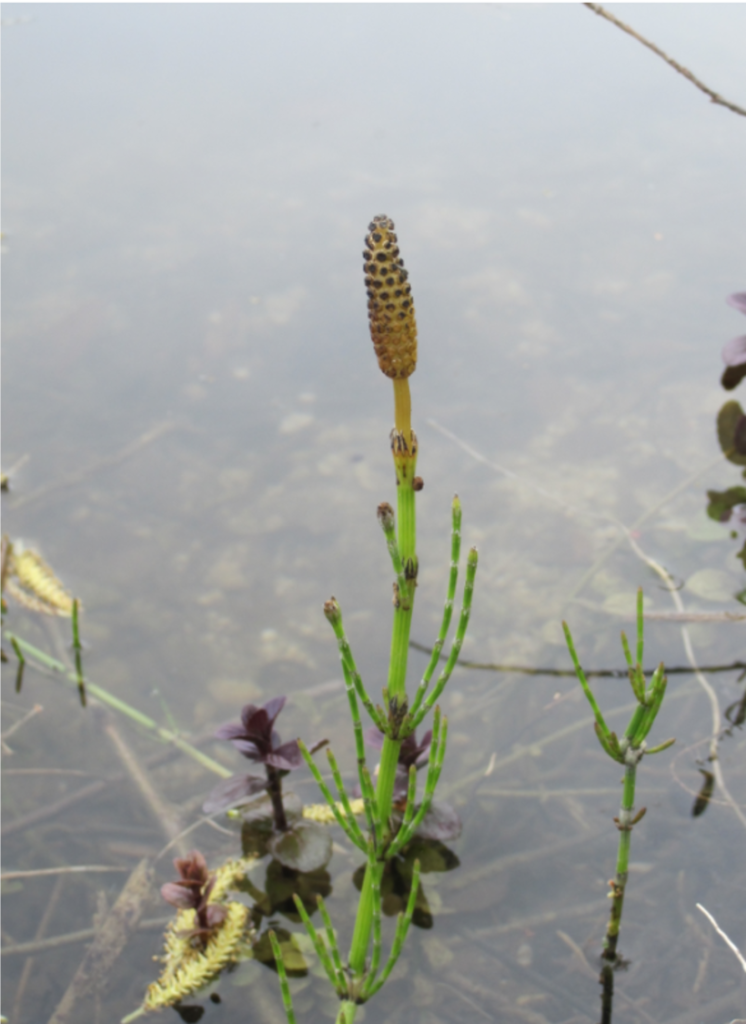
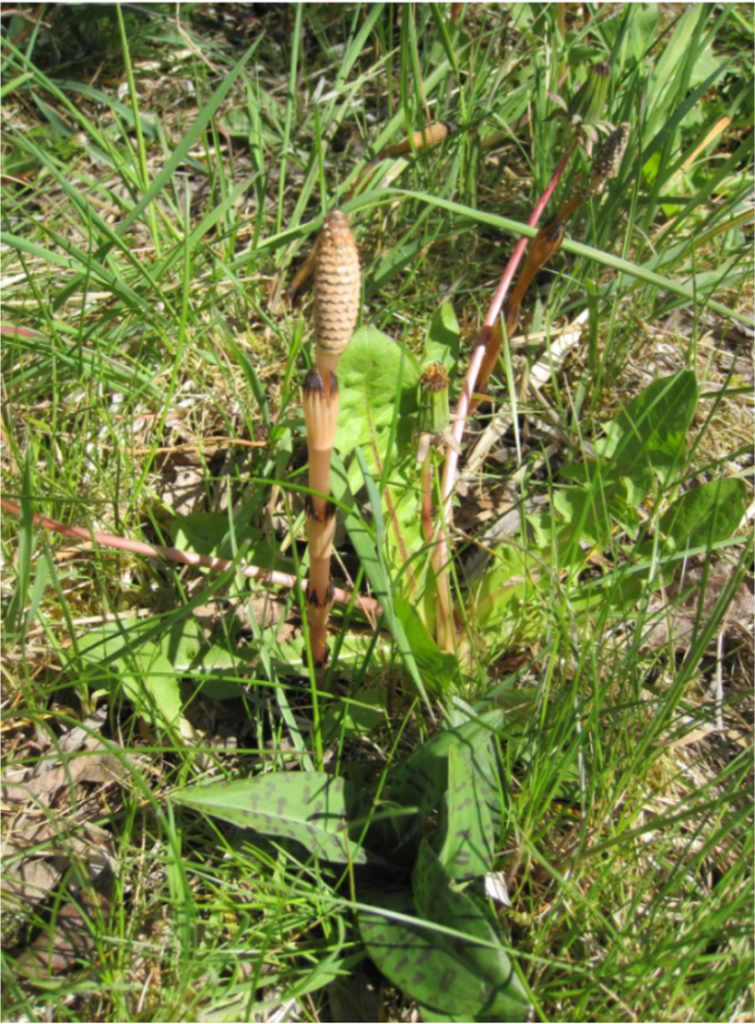
There are two commonly found species: the field (or common) horsetail (Equisetum arvense) and the marsh horsetail (E. palustre). Both are found growing in marshy places – and both are found at the Village Lake. The field horsetail produces a ‘cone’ on a pale, non-photosynthetic stem whilst the marsh horsetail has its ‘cones’ at the tips of the green stems carrying its whorls of branches.
The field horsetail along the western bank (where the orchids are growing) and the marsh horsetail along the northern bank.